ACEC Utah
1-801-712-8500
Email
http://acecutah.org



Preparing Utah’s Infrastructure for Long-Term Resilience
May 20, 2026
Comments are off
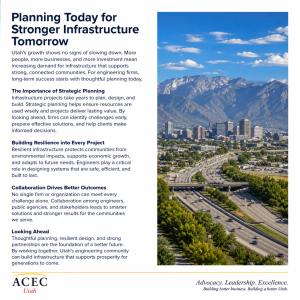 Utah continues to experience significant growth. Expanding communities, increased transportation demands, and evolving environmental conditions are creating new challenges for infrastructure systems across the state. Roads, bridges, water systems, and public facilities must not only support today’s population but also remain reliable for decades to come.
As communities plan for the future, resilience has become a central focus in infrastructure development. Consulting engineers play a critical role in helping public agencies, municipalities, and private stakeholders design systems that can adapt to changing conditions while continuing to serve the public efficiently and safely.
Understanding Infrastructure Resilience
Infrastructure resilience refers to the ability of systems and structures to withstand stress, recover from disruption, and continue functioning over time. This includes preparing for population growth, severe weather events, aging infrastructure, and changing environmental conditions.
In Utah, resilience planning is especially important because of the state’s rapid development and diverse geographic conditions. Communities must balance growth with sustainability while ensuring infrastructure systems remain dependable and cost-effective.
Consulting engineers help address these challenges by evaluating long-term performance, identifying potential vulnerabilities, and designing solutions that support durability and efficiency.
Planning for Population Growth
Utah remains one of the fastest-growing states in the country. Increased growth creates additional demand on transportation corridors, water systems, and public infrastructure.
Planning for this growth requires more than expanding capacity. It requires strategic decision-making that considers future needs, maintenance demands, and long-term operational efficiency.
Consulting engineers work with communities to develop transportation improvements, utility expansions, and infrastructure systems that support continued growth without sacrificing functionality or safety. By incorporating long-term planning into project development, communities can avoid costly reactive solutions later.
Improving Sustainability and Efficiency
Resilient infrastructure is closely tied to sustainability. Efficient systems reduce long-term costs, improve reliability, and help conserve valuable resources.
Engineering firms are increasingly incorporating sustainable design principles into infrastructure projects. This may include stormwater management improvements, energy-efficient systems, water conservation strategies, and materials designed for longer service life.
These efforts help communities maximize infrastructure investments while supporting environmental stewardship and operational reliability.
The Importance of Collaboration
Building resilient infrastructure requires collaboration between engineers, public agencies, contractors, and community leaders. Successful projects depend on open communication and a shared understanding of long-term goals.
Consulting engineers often serve as technical advisers throughout the planning and development process. Their expertise helps stakeholders make informed decisions regarding design standards, project priorities, and future infrastructure needs.
This collaborative approach supports smarter investments and better outcomes for the communities these projects serve.
Looking Ahead
The demands placed on Utah’s infrastructure will continue to evolve in the years ahead. Preparing for the future requires thoughtful planning, innovative solutions, and a commitment to long-term resilience.
Consulting engineers play an essential role in helping communities navigate these challenges. Through strategic planning, technical expertise, and collaboration, they help ensure infrastructure systems remain reliable, sustainable, and prepared to support Utah’s continued growth.
As infrastructure needs become more complex, res
ilient design and forward-thinking planning will remain essential to building strong communities across the state.
Popular Posts



©2026 Social5, LLC